Knowing which side you sleep on is not enough to tell what is causing hair loss. A 2026 observational study found a link between sleeping side and an uneven hairline in men who already had pattern hair loss. That is a reason to look into the question, not proof that side sleeping causes baldness or that changing position will regrow hair. Some documented kinds of hair loss do involve repeated pulling or long periods without moving, but those are different exposures from an ordinary night's sleep.
TL;DR
- One 2026 study of 161 men linked habitual side sleeping to more recession on that side. It could not show cause and effect.
- Tight hairstyles kept on overnight are a separate, recognised cause of traction hair loss.
- Hair loss from pressure has been reported after long surgery or intensive care; those cases say nothing about ordinary sleep.
- If one side looks different, record what you see and your history, and bring it to a clinician.
Important
This article is educational and not medical advice. If you are worried about sudden shedding, scalp symptoms, or side effects, talk to a licensed clinician.
What the 2026 study found
Researchers studied 161 men with androgenetic alopecia and an M-shaped hairline. One researcher asked about sleeping position and another measured the recession area on each side. Habitual left-side sleepers had more recession on the left, and right-side sleepers more on the right. Men who slept on their backs, or in no fixed position, showed no left-right difference (Wu and colleagues, 2026).
This was an observational comparison based on reported habits, not a trial that changed anyone's sleeping position. It measured each man once, so it could not test regrowth after a change of position or show which came first. It also did not measure scalp blood flow or oil on the pillow; the authors offer those as possible explanations that need further study, not as findings.
The study left out men who had ever been treated for hair loss, and men with conditions that shape sleeping position, such as obesity, sleep apnea or breathing disease. It reports no blinding between the person who asked about sleep and the person who measured the recession, and no adjustment for age or for how long the hair loss had lasted (Wu and colleagues, 2026).
The authors read their result more strongly than this article does: their title says that sleeping position affects hairline recession, and they describe the findings as practical guidance. With one measurement per person and reported habits, the design supports a link worth studying, not a cause.
Three questions that get mixed together
| Question | Relevant evidence | What remains uncertain |
|---|---|---|
| Does my usual sleeping side explain an uneven hairline? | The observational study above raises the question | Your own cause, or any benefit from changing position |
| Could an overnight hairstyle matter? | Dermatology recognises repeated tension on hair as a cause of hair loss | A clinician has to assess the exposure and the type of hair loss |
| Could a long period without moving matter? | Case reports describe pressure-related hair loss after surgery or intensive care | Those settings give no risk estimate for ordinary sleep |
The exposure matters. “I usually sleep on my right side” is different from “I keep my hair tightly tied up all night” or “I could not move my head during a long operation.” Grouping them together hides the question instead of answering it.
Overnight hairstyles and traction
The American Academy of Dermatology describes traction alopecia as hair loss caused by repeated pulling from tight hairstyles or head coverings, and lists styles that need rollers worn to bed most of the time among the risks (AAD hairstyle guidance).
A dermatology report described two patients whose nighttime styling, tight curlers in one case and a high, tight ponytail kept on overnight in the other, came before traction alopecia. One diagnosis was confirmed by a biopsy and the other was made clinically. The same report noted that silk scarves, bonnets and pillows are often advised without evidence-based data behind them (Samrao and colleagues, 2021).
Those cases are about tension from styling, not a trial showing that a particular sleeping side is harmful. If you talk to a clinician about a concern, describe how you wear your hair at night as well as during the day. For tracking a known case, see traction alopecia and tracking recovery.
Pressure alopecia is a different setting
A three-case report described patches of hair loss after long surgery or a long stay in intensive care with the head kept still (Tortelly and colleagues, 2020). Those cases show that the condition exists; they do not tell us what happens during ordinary sleep in an adult who moves normally. If you noticed a change after surgery, a hospital stay or a time when you could not move normally, include that history when you seek an assessment.
What to record if one side looks different
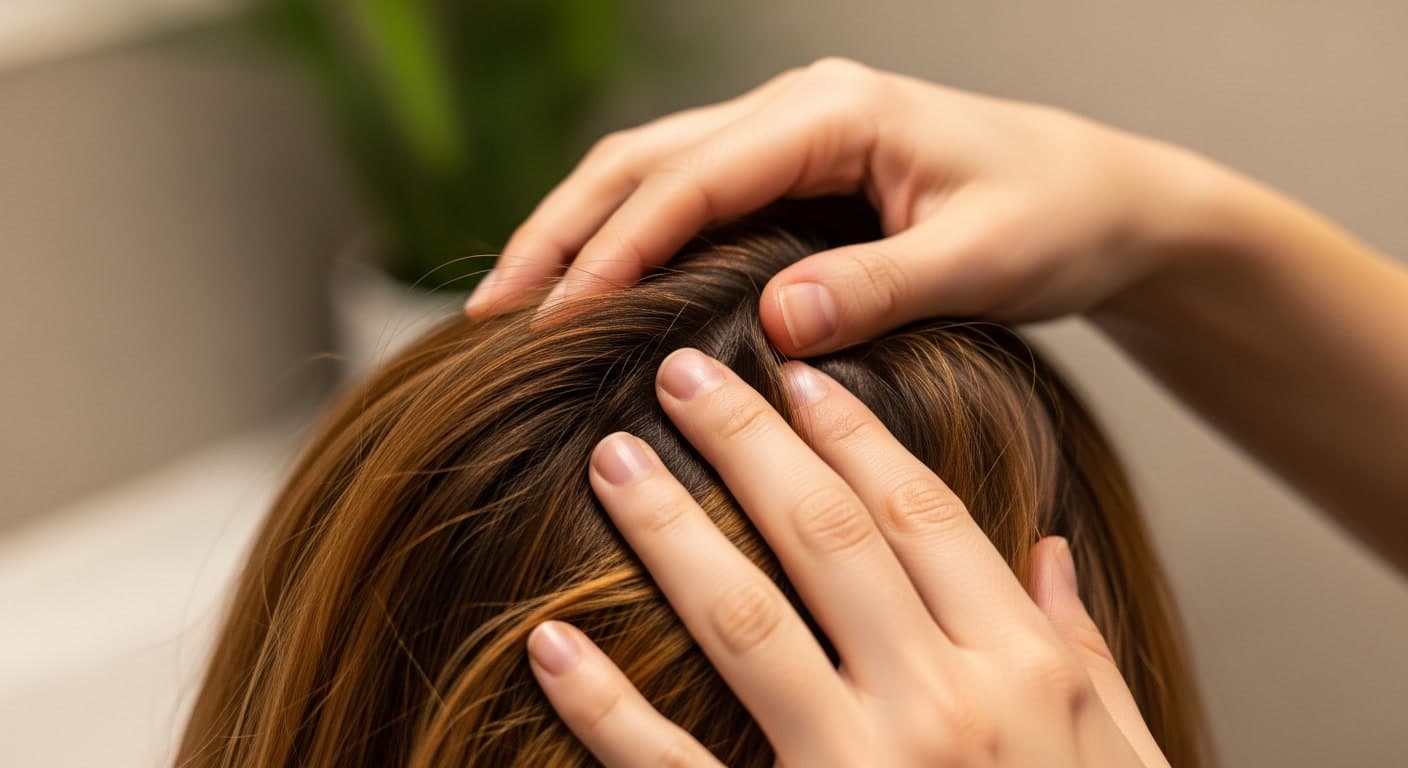
Start with a description of what you see, not a theory about the cause. “The left temple looks more exposed in this photo” is a clearer note than “my pillow caused this.”
- When you first noticed it, and whether it shows in more than one comparable photo.
- Which area is affected, rather than one score for temple, crown and side together.
- Any change in haircut, styling, headwear or overnight hairstyle.
- Any recent surgery, hospital stay or time when you could not move normally.
- The original dated images, with unlike angles or lighting marked as hard to compare.
This is a checklist for preparing notes, not a test of whether sleep caused the change. Your usual sleeping side can be a context note without becoming a diagnosis.
Why a pillow experiment cannot settle the cause
Changing a pillowcase and then seeing a better photo would not show why the photo changed. Hair arrangement, camera conditions, length and unrelated changes can all differ at the same time, and an app score before and after a personal experiment has no control group. Describe the photo record in one of three ways instead:
- No clear visible difference in the comparable photos you have.
- A repeated visible difference that you want assessed.
- Inconclusive, because the photos or conditions do not allow a comparison.
None of these tells you that a pillowcase caused, prevented or reversed hair loss. A tracking record is also not a condition for getting help: the AAD describes diagnosis as a medical history and a scalp exam, sometimes with further tests (AAD diagnosis overview), so bring the record you have rather than waiting for it to be perfect.
Related reading
- Why hair can look thinner under bright light
- Comparing hair photos without bias
- Traction alopecia and tracking recovery
Sources: Wu et al. 2026, JPRAS Open; Samrao et al. 2021, Skin Appendage Disorders; Tortelly et al. 2020, Skin Appendage Disorders; AAD: hairstyles that pull can cause hair loss; AAD: hair loss diagnosis and treatment.