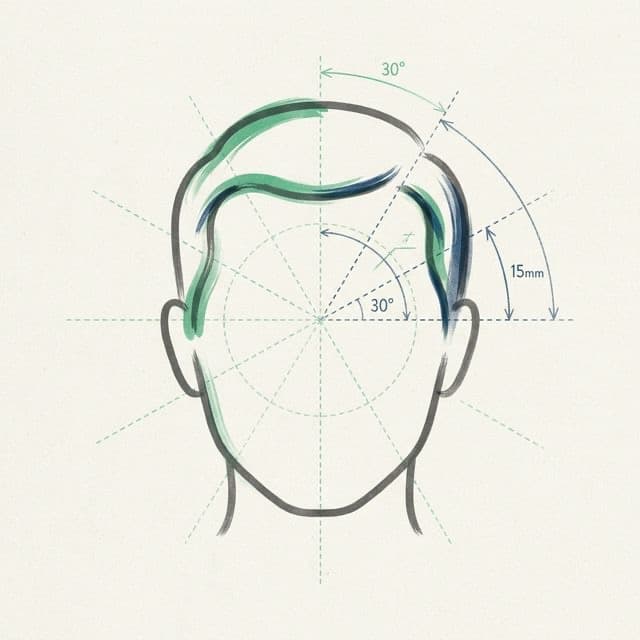
What zones does this protocol cover?
This protocol focuses on: hairline, temples. Track zones separately so you do not average away the signal.
Why does this matter for tracking?
- Hairline change is slow, which is exactly why consistent measurement works.
- Small setup differences can create fake recession, so a protocol prevents false alarms.
What should you photograph?
- Front hairline straight-on (no tilt, neutral expression).
- Left and right temples at the same angle each time.
- Optional: short video pan if you can keep distance consistent.
What should you log each week?
- Lighting/room consistency (same overhead light).
- Hair state (dry, same styling; note haircuts).
- Any routine changes (ideally one variable at a time).
How should you interpret what you see?
- Compare like-for-like: same distance, same crop, same hair state.
- Compare 4-8 week windows. A single bad week is usually noise.
When should you wait versus act?
- Compare 4-8 week windows, not single weeks.
- If photos are inconsistent, fix setup before interpreting change.
- If recession trend worsens across 2-3 windows, consider a clinician conversation.
When should you see a clinician?
- Sudden shedding or rapid change over days/weeks.
- Patchy hair loss, scalp pain, redness, or significant itch.
What common mistakes create false signals?
- Different camera distance each time (makes hairline look worse/better).
- Comparing wet vs dry hair photos.
- Using different lenses (front vs wide) across sessions.
FAQ
How often should I photograph my hairline?
Weekly is usually enough if you keep the setup consistent. The key is comparing 4-8 week windows rather than day-to-day noise.
What if my hairline looks different in different lighting?
That is exactly why you must standardize the room, light, angle, and distance. Track consistency first, then interpret trends.