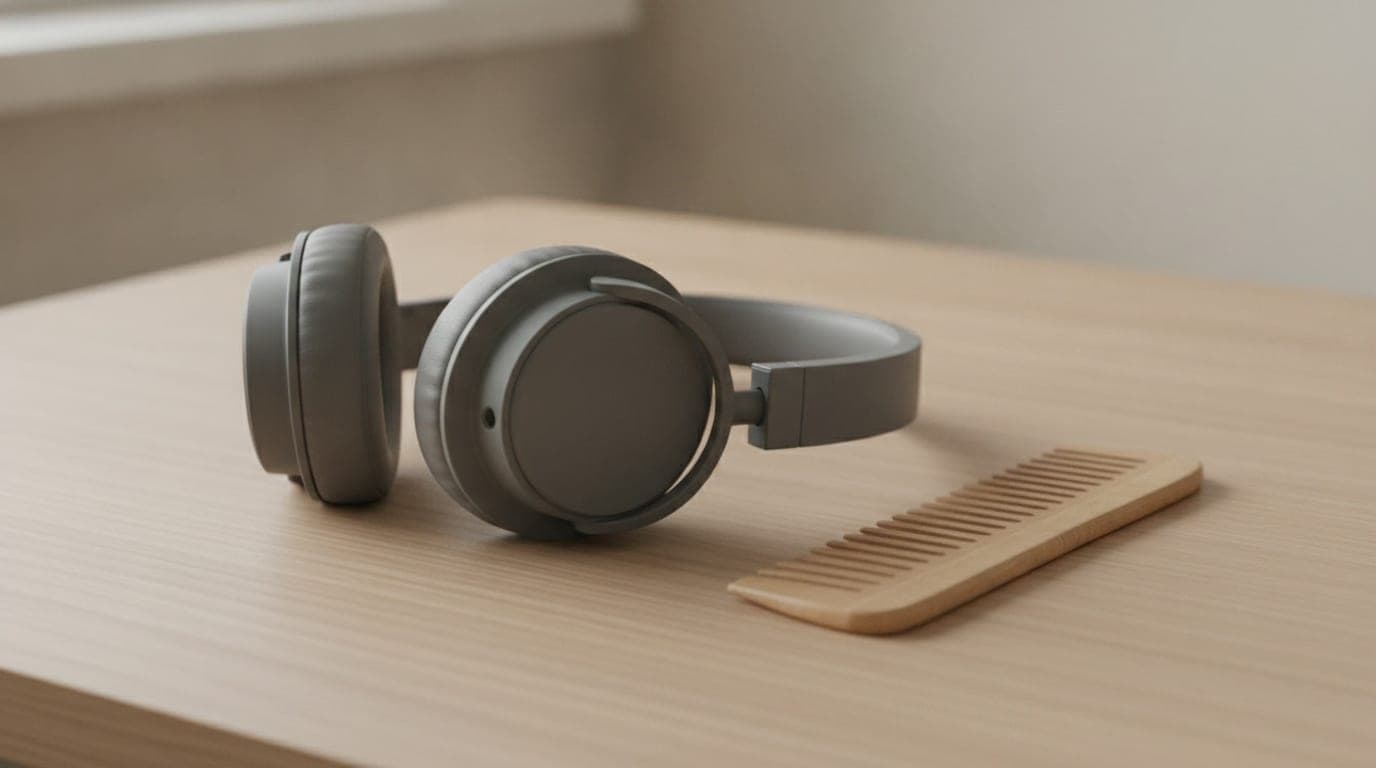
Normal headphone use is not a known cause of hair loss. We found no study that links headphones, earbuds or headsets to balding, and they do nothing to the hormones and genes behind pattern hair loss. The one way headwear is known to thin hair is constant rubbing or pulling in the same spot, so a tight band worn for hours every day is the only case worth watching.
If you notice a thin line exactly where the band sits, that is easy to check with a few photos. If the thinning is at your temples or crown, the headphones are almost certainly not the reason.
TL;DR
- No published study links headphones or earbuds to hair loss.
- Pattern hair loss comes from genes and hormones, which headphones do not touch.
- Constant rubbing or pulling from headwear can cause traction alopecia, mostly along the contact line.
- Earbuds do not touch the scalp, so they are not a plausible cause.
- If a band leaves a sore or red mark daily, loosen it, move it and take a photo of the spot.
Important
This article is educational and not medical advice. If you are worried about sudden shedding, scalp symptoms, or side effects, talk to a licensed clinician.
Why the question comes up
Over-ear headphones sit on the top of the head and press on the sides near the ears, which are also areas where people first notice thinning. Many people wear them for hours a day for work or gaming. When someone sees a flattened strip of hair after taking them off, it is natural to wonder whether the band is doing damage. A flattened strip is a styling effect and goes away once the hair moves again.
Pattern hair loss works differently. It follows a fixed pattern at the temples and crown, driven by genetics and the hormone DHT, and it would happen with or without headphones. The same logic is covered in more detail in do hats cause hair loss.
The real but narrow risk: traction alopecia
Traction alopecia is hair loss caused by prolonged or repeated tension on the hair (Samrao and colleagues, 2011). It is usually linked to tight hairstyles. The American Academy of Dermatology adds that the constant rubbing of a hat, head scarf or other hair covering can also lead to it, especially if the hair is pulled back tightly underneath (AAD: hairstyles that can cause hair loss).
Headphones are not named in that guidance, and nobody has studied them. By the same reasoning, a band that grips tightly and rubs the same strip of scalp for many hours a day, every day, could add stress there, especially on top of a tight ponytail or bun. Light, loose headphones worn for a commute are a different situation.
Earbuds sit in the ear and do not touch the scalp, so they have no way to pull or rub hair. Headsets with a band behave like over-ear headphones.
How to tell band-related thinning from pattern loss
- Location: band-related thinning would follow the contact line across the top of the head or above the ears. Pattern loss starts at the temples, front or crown.
- Shape: a narrow strip that matches the band points to friction. A gradual, even change at the hairline or crown points to pattern loss.
- Scalp signs: soreness, redness or small bumps under the band suggest mechanical irritation.
- Timeline: a change that began after a new, tighter pair or a jump in daily hours is worth noting.
Hairs that remain along the edge of a thinned hairline, called the fringe sign, were seen in 35 of 41 women diagnosed with traction alopecia in one clinic review (Samrao and colleagues, 2011). A dermatologist can look for signs like this. You do not need to diagnose it yourself.
What to track if you are worried
- The contact strip: one photo from above, hair parted along where the band sits, in the same light each time.
- Your usual zones: hairline, temples and crown, so you can see whether the change is in the strip or elsewhere. See how often to take progress photos.
- Listening time: your usual hours with the headphones on, plus any switch to a new pair.
- Scalp marks: note any red line or tenderness after a long session.
Simple changes are cheap to test: loosen the band, shift it forward or back a little each day, take breaks, and avoid wearing it over a tight ponytail. Then compare photos a few months apart. If the strip stays the same while your temples or crown change, the headphones were not the cause. For more on recovery from traction, see tracking traction alopecia recovery.
When to see a dermatologist
See a dermatologist if a thin strip does not improve after you change how you wear headphones, if the scalp under the band stays sore, red or bumpy, or if you see round bald patches. The AAD notes that some traction alopecia can become permanent the longer it goes untreated (AAD: hairstyles that can cause hair loss), so it is better to check early than to wait.
Next step
Take one photo of the band's contact strip and one each of your temples and crown today. Repeat in two to three months. Where the change shows up tells you far more than worrying about the headphones.
Related reading
Sources: Samrao et al. 2011, Dermatology Online Journal; AAD: hairstyles that can cause hair loss.