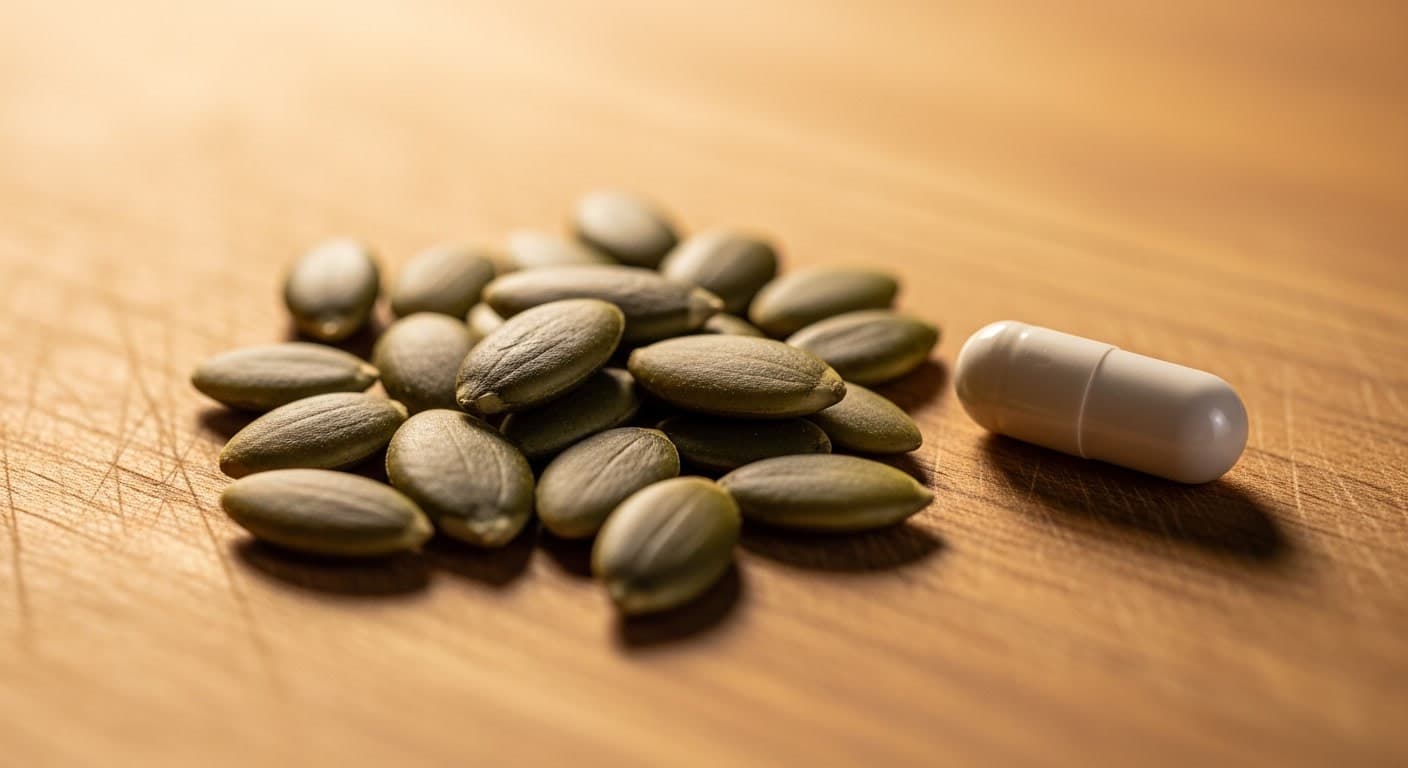
Zinc is one of the most overlooked micronutrients in hair loss. It sits at the intersection of protein synthesis, cell division, and immune function, all of which your follicles depend on to produce healthy terminal hair. A 2013 study published in the Annals of Dermatology (Park et al.) found that patients with alopecia areata and telogen effluvium had significantly lower serum zinc levels than healthy controls. Correcting a zinc deficit will not regrow hair on its own, but leaving one uncorrected can keep your follicles stuck in a shedding cycle that no topical treatment will fix. BaldingAI helps you track density changes over the 8-12 week supplementation window so you can see if correcting a deficiency actually moves the numbers.
TL;DR
- Zinc supports hair follicle cell division, keratin synthesis, and scalp immune regulation.
- Serum zinc below 70 mcg/dL is associated with increased hair shedding in clinical studies.
- RDA is 11 mg for men and 8 mg for women. The tolerable upper limit is 40 mg/day.
- Zinc picolinate and zinc glycinate absorb better than zinc oxide or zinc sulfate.
- Track density and thickness scores for 8 to 12 weeks after starting supplementation to measure the effect.
Important
This article is educational and not medical advice. If you are worried about sudden shedding, scalp symptoms, or side effects, talk to a licensed clinician.
What zinc does for your hair follicles
Hair follicles are among the fastest-dividing cells in the human body. Each follicle cycles through anagen (growth), catagen (regression), and telogen (rest), and every phase requires zinc-dependent enzymes to function correctly. Zinc is a cofactor for over 300 enzymatic reactions, including those that build keratin and maintain the structural integrity of the hair shaft.
Zinc also modulates the immune environment around the follicle. In alopecia areata, the immune system attacks hair follicles directly. Research suggests that adequate zinc levels help regulate T-cell activity and reduce the inflammatory signaling that triggers follicle destruction. For non-autoimmune hair loss like telogen effluvium, zinc deficiency can prematurely push follicles from anagen into telogen, causing diffuse shedding across the scalp.
How low is too low?
Normal serum zinc ranges from 70 to 120 mcg/dL. The Park et al. study found that patients with hair loss conditions averaged serum zinc levels around 56 to 65 mcg/dL, well below the lower threshold. Even levels in the 70 to 80 mcg/dL range (technically "normal") may be suboptimal for follicle health, since hair is one of the first systems the body deprioritizes when zinc supply tightens.
A standard serum zinc test is available through most primary care physicians. If you are already getting blood work for hair loss, ask to add zinc to the panel alongside ferritin, vitamin D, and thyroid markers. The test is inexpensive and can reveal a correctable cause of shedding that might otherwise go undiagnosed for months.
Food sources: where zinc actually comes from
The richest dietary source of zinc is oysters, which deliver roughly 74 mg per 3 oz serving. That is nearly seven times the male RDA in a single portion. Most people do not eat oysters regularly, so the practical sources for daily intake are beef (7 mg per 3 oz), pumpkin seeds (2.2 mg per oz), lentils (2.5 mg per cup cooked), and chickpeas (2.5 mg per cup cooked).
There is an important absorption detail. Phytates, found in whole grains, legumes, and seeds, bind zinc and reduce its bioavailability by up to 50%. Vegetarians and vegans are at higher risk of functional zinc deficiency even when their intake numbers look adequate on paper. Soaking, sprouting, or fermenting grains and legumes reduces phytate content and improves absorption. For a broader look at how diet affects follicle health, see the best foods for hair growth breakdown.
Supplements: form, dose, and timing
Not all zinc supplements are equal. Zinc picolinate and zinc glycinate (chelated forms) show absorption rates 20 to 40% higher than zinc oxide, the form found in many cheap multivitamins. Zinc citrate falls somewhere in between. If you are supplementing specifically to correct a deficiency, the form matters.
The RDA is 11 mg for adult men and 8 mg for adult women, but dermatologists treating zinc-related hair loss often recommend 25 to 30 mg per day for an initial correction period of 8 to 12 weeks. Do not exceed 40 mg per day long-term without medical supervision. Chronic over-supplementation causes copper depletion, which paradoxically triggers its own form of hair loss and can cause neurological symptoms.
Take zinc supplements with food to reduce nausea, but avoid taking them at the same time as iron or calcium supplements, which compete for the same absorption pathways. Spacing them 2 hours apart is enough to avoid interference.
The copper connection
Zinc and copper share intestinal absorption pathways, so supplementing one at high doses suppresses the other. Long-term zinc supplementation above 40 mg/day without copper monitoring can push you into copper deficiency, which causes anemia, fatigue, and, ironically, hair loss. If your dermatologist recommends high-dose zinc, they should also check your serum copper and ceruloplasmin levels at the 8-week mark.
Some zinc supplements include 1 to 2 mg of copper per dose to prevent this imbalance. This is a reasonable precaution if you plan to supplement for more than 12 weeks. The ratio to aim for is roughly 10:1 zinc to copper.
Who is most at risk for zinc-related hair loss?
- Vegetarians and vegans: Lower bioavailability from plant sources due to phytate binding. Studies estimate that vegetarians may need up to 50% more dietary zinc than omnivores to maintain equivalent serum levels.
- People with GI conditions: Crohn's disease, celiac disease, and chronic diarrhea impair zinc absorption in the small intestine. Even adequate dietary intake may not translate to adequate serum levels.
- Chronic dieters: Calorie restriction below 1,500 kcal/day frequently leads to suboptimal zinc intake, compounding the telogen effluvium risk from the calorie deficit itself.
- Heavy alcohol users: Alcohol reduces zinc absorption and increases urinary zinc excretion. Chronic heavy drinking depletes zinc stores over time.
- Pregnant and lactating women: Zinc requirements increase to 11 to 13 mg/day during pregnancy and lactation, and deficiency can contribute to postpartum shedding.
Zinc is not a standalone hair loss treatment
This is important to state clearly. Zinc supplementation does not treat androgenetic alopecia (pattern hair loss driven by DHT sensitivity). If your hair loss follows a pattern distribution at the temples and crown, zinc correction alone will not reverse it. What zinc correction can do is remove a compounding factor. Many people have pattern loss and a nutrient deficiency simultaneously, and correcting the deficiency reduces the total shedding load so you can see the actual pattern more clearly.
For diffuse shedding that does not follow a pattern, zinc deficiency is one of the first things to rule out. If your shedding is diffuse and even across the scalp, get your zinc tested before assuming the worst.
How to track recovery after zinc correction
Correcting a zinc deficiency takes 4 to 8 weeks of consistent supplementation to normalize serum levels. But hair operates on its own timeline. Follicles that were prematurely pushed into telogen need to complete the resting phase (typically 2 to 4 months) before re-entering anagen and producing new growth. That means you should not expect visible improvement for at least 8 to 12 weeks, and full recovery may take 4 to 6 months.
Here is how to set up a trackable protocol:
- Week 0: Get a serum zinc test. Take a BaldingAI baseline scan. Record density and thickness scores across all zones.
- Weeks 1 to 8: Supplement consistently. Scan weekly with the same lighting and angle. Do not expect measurable change yet.
- Week 8: Retest serum zinc to confirm levels have normalized. Compare your 8-week density trend against baseline.
- Weeks 9 to 12: This is the earliest window for measurable improvement. An upward trend in density scores, combined with confirmed zinc repletion on blood work, is a strong signal that the deficiency was contributing to your shedding.
If your zinc has normalized but density scores remain flat at week 12, the shedding likely has another cause. That is still useful information. It tells you and your dermatologist to look elsewhere, rather than spending more months hoping zinc alone will fix it.
Next step
If you suspect zinc deficiency, ask your doctor to add serum zinc to your next blood panel. Take a BaldingAI baseline scan today so you have density and thickness numbers to compare against once supplementation kicks in.
Background reading
- Best foods for hair growth
- Blood tests for hair loss: what to ask your doctor
- Ferritin, vitamin D, and thyroid lab checklist
- Telogen effluvium vs male pattern baldness
Sources: Park et al. 2013, Annals of Dermatology; NIH Office of Dietary Supplements: Zinc Fact Sheet.