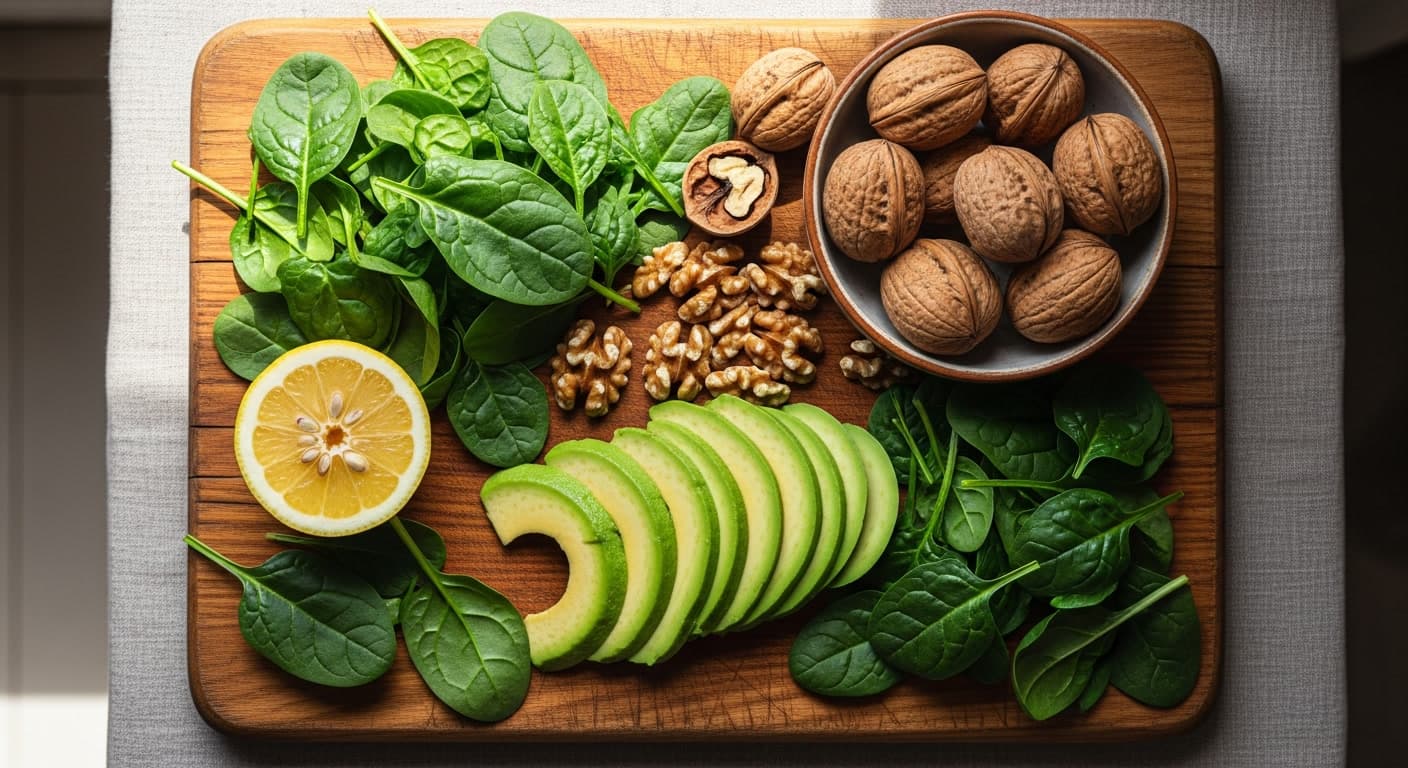


The best foods for hair growth are those rich in protein, iron, zinc, biotin, vitamin D, and omega-3 fatty acids. Eggs, salmon, spinach, walnuts, and sweet potatoes consistently top the evidence-backed list because they supply the raw materials your follicles need to produce strong, thick strands. But here is the part that most food-list articles skip: dietary changes take 3 to 6 months to show up in your hair, and without objective measurement you will never know whether the salmon and spinach actually moved the needle.
BaldingAI tracks density and thickness scores over time, so you can see whether a dietary change actually moves the numbers. That turns nutrition from a hopeful guess into a testable variable.
TL;DR
- Hair is 95% keratin protein. Without adequate protein, iron, zinc, biotin, vitamin D, and omega-3s, follicles cannot build strong strands.
- Iron deficiency triggers telogen effluvium (premature shedding). Vitamin D regulates the follicle growth cycle.
- Dietary improvements take 3 to 6 months to appear in your hair because of the follicle growth cycle lag.
- Track density and thickness scores over a 12-week window to know if nutritional changes are working.
Important
This article is educational and not medical advice. If you are worried about sudden shedding, scalp symptoms, or side effects, talk to a licensed clinician.
Why nutrition matters for hair growth
Hair is roughly 95% keratin, a structural protein your body assembles from amino acids. Each follicle is a metabolically active mini-organ with one of the highest cell turnover rates in the body. That turnover demands a constant supply of micronutrients, and when supply drops, hair is one of the first systems the body deprioritizes. The body routes scarce nutrients to vital organs first. Follicles lose.
A 2017 review in Dermatology Practical & Conceptual (PMC5315033) analyzed the relationship between nutrient deficiency and hair loss. The authors found that deficiencies in iron, zinc, and vitamin D directly correlated with increased hair shedding. The review concluded that correcting these deficiencies often slowed or reversed the shedding, provided the underlying cause was nutritional rather than hormonal or genetic.
The 6 nutrients your follicles need
1. Protein
Keratin synthesis requires a steady amino acid supply. Diets providing less than 0.8 g of protein per kilogram of body weight can push follicles into the resting phase prematurely. For a 75 kg person, that is a minimum of 60 g per day, though many hair-focused nutritionists recommend closer to 1.2 g/kg.
2. Iron
Iron carries oxygen to the dermal papilla cells at the base of each follicle. When ferritin (stored iron) drops below approximately 40 ng/mL, follicles can enter telogen prematurely. This is telogen effluvium, the diffuse shedding condition that accounts for a significant share of non-pattern hair loss. Women who menstruate, vegans, and frequent blood donors are at highest risk.
3. Zinc
Zinc plays a role in DNA replication and cell division within the hair matrix. A 2013 study in the Annals of Dermatology found that serum zinc levels were significantly lower in subjects with all types of hair loss compared to healthy controls. The recommended daily intake is 11 mg for men and 8 mg for women.
4. Biotin (vitamin B7)
Biotin supports keratin infrastructure. True biotin deficiency causes brittle hair and shedding, but it is uncommon in people eating a varied diet. Supplementing biotin when you are not deficient has limited evidence of benefit. Read the full biotin evidence checklist before spending money on high-dose supplements.
5. Vitamin D
Vitamin D receptors sit on hair follicle keratinocytes and regulate the transition between growth phases. A 2019 meta-analysis found that people with alopecia areata and telogen effluvium had significantly lower serum vitamin D than matched controls. An estimated 42% of US adults are vitamin D deficient, making this one of the most common correctable factors in hair health. See the lab checklist for hair loss for target ranges.
6. Omega-3 fatty acids
Omega-3s reduce scalp inflammation, support sebum production, and improve blood flow to follicles. A 2015 study published in the Journal of Cosmetic Dermatology found that women supplementing with omega-3 and omega-6 fatty acids for six months reported reduced hair loss and increased hair density compared to placebo.
Best foods to eat for hair growth
Here is the practical grocery list, organized by which nutrient gap each food fills:
- Eggs: Complete protein (6 g per egg), biotin (10 mcg per egg), zinc, selenium. One of the most nutrient-dense foods for follicle health per calorie.
- Salmon and fatty fish: Omega-3 fatty acids, vitamin D (447 IU per 3 oz serving of salmon), and high-quality protein in a single food.
- Spinach and dark leafy greens: Non-heme iron, folate, vitamin A, and vitamin C (which increases iron absorption). One cup of cooked spinach delivers 6.4 mg of iron.
- Walnuts: Plant-based omega-3s (ALA), zinc, biotin, and vitamin E. A 1 oz serving provides 2.5 g of ALA.
- Sweet potatoes: Beta-carotene, which the body converts to vitamin A. Vitamin A stimulates sebum production, which keeps the scalp moisturized and protects follicles.
- Berries: Vitamin C (one cup of strawberries delivers 85 mg, more than the daily requirement). Vitamin C drives collagen production and boosts iron absorption from plant sources.
- Beans and lentils: Plant-based protein, iron, zinc, and folate. One cup of cooked lentils contains 18 g protein and 6.6 mg iron.
- Avocados: Vitamin E (an antioxidant that protects the scalp from oxidative stress), healthy fats, and biotin.
You do not need to eat all of these every day. The goal is to rotate them consistently enough that your follicles never run short on any single nutrient for weeks at a time.
Foods and habits that hurt hair health
What you avoid matters as much as what you eat. Several common dietary patterns actively work against follicle health:
- Excess vitamin A: Hypervitaminosis A (typically from supplements, not food) triggers telogen effluvium. The upper tolerable limit is 10,000 IU per day. Some acne supplements and liver-heavy diets can exceed this.
- Crash diets and severe calorie restriction: Rapid weight loss is one of the most reliable triggers of telogen effluvium. Calorie deficits below 1,200 kcal/day deprive follicles of the energy and nutrients they need. The shedding typically begins 2 to 4 months after the caloric restriction starts.
- Excessive alcohol: Alcohol impairs zinc absorption, depletes B vitamins, and disrupts hormone balance. Chronic heavy drinking is associated with both hair thinning and poor hair quality.
- High-sugar and ultra-processed diets: Diets high in refined sugar promote systemic inflammation and insulin resistance, both of which can accelerate follicle miniaturization in genetically predisposed individuals.
How to track whether dietary changes help your hair
This is where most nutrition articles end with "eat well and be patient." That is useless advice if you are spending real money on groceries and supplements. You need data. Here is a 12-week protocol that turns a dietary change into a measurable experiment:
- Week 0 (baseline): Take a BaldingAI scan before changing anything. Record your density and thickness scores for hairline, temples, crown, and part line. Log your current diet roughly. This is your control measurement.
- Weeks 1 to 4: Implement dietary changes. Scan weekly with the same lighting, angle, and hair state. Do not expect visible change yet. Hair grows roughly 1 cm per month, and new growth from improved nutrition will not be long enough to register visually.
- Weeks 5 to 8: Continue scanning. Compare your 8-week density scores against your baseline. If you also got blood work (ferritin, vitamin D, zinc), retest now to confirm nutrient levels are rising.
- Weeks 9 to 12: This is the earliest window where dietary improvements typically start appearing in hair metrics. Compare your 12-week trend against baseline. A stable or upward trend in density and thickness scores, combined with confirmed nutrient repletion on blood work, is a strong signal that the dietary change is contributing.
If density scores have not improved by week 12, that does not necessarily mean the diet failed. Some nutrient corrections take a full 6 months to reflect in hair. But 12 weeks gives you enough data points to distinguish a flat trend from an upward one.
Common questions
Do hair growth supplements work better than food?
Supplements correct deficiencies faster than food alone, but they do not outperform a nutrient-rich diet when levels are already adequate. A 2019 review in Dermatology and Therapy concluded that supplementation is most effective when a documented deficiency exists. Taking megadoses of biotin or zinc when your levels are normal does not produce extra hair growth and can cause side effects (zinc toxicity, biotin interference with lab tests).
Can diet alone reverse hair loss?
If the hair loss is caused by a nutrient deficiency (iron-deficiency telogen effluvium, for example), correcting the deficiency often reverses the shedding within 6 to 12 months. If the hair loss is androgenetic (pattern baldness driven by DHT sensitivity), diet alone will not reverse it. Good nutrition supports follicle health and can slow the rate of miniaturization, but it does not block DHT. Tracking helps you distinguish between these scenarios: deficiency-driven shedding tends to recover across all zones evenly, while pattern loss follows a predictable distribution at temples and crown.
How long before I see results from changing my diet?
The hair growth cycle creates a built-in delay. After nutrient levels normalize in your blood (which can take 4 to 8 weeks of consistent intake), follicles that were prematurely pushed into telogen need to complete the resting phase and re-enter anagen. That transition takes another 2 to 4 months. Realistically, expect 3 to 6 months before improved nutrition shows measurable results in your hair. This is exactly why objective tracking matters: your eyes cannot detect gradual improvement over months, but a scored trend line can.
Next step
Take a baseline scan today before you change your diet. BaldingAI scores density and thickness across zones so you have a real number to compare against in 12 weeks. Without a baseline, you are guessing.
Background reading
- Biotin evidence checklist
- Lab checklist for hair loss
- Telogen effluvium vs pattern baldness
- Tracking guide
Sources: Guo & Katta 2017, Dermatology Practical & Conceptual (PMC5315033) and AAD: 18 causes of hair loss.