Your hair is roughly 95% keratin, a structural protein assembled from amino acids you eat. When dietary protein drops below what your body considers essential, it makes a triage decision: vital organs get protein first, and non-essential functions like hair production get deprioritized. The follicles that were actively growing slow down or shut off entirely. The result is diffuse thinning that shows up 2 to 3 months after the deficit begins.
If you are tracking with BaldingAI, a protein deficit gives you a clear variable to isolate. Increase your intake, hold everything else steady, and watch your density scores over 12 weeks. That is the difference between guessing in the mirror and actually measuring the impact of a dietary change.
TL;DR
- Hair is 95% keratin protein. Follicles in the anagen growth phase have the highest protein demand of any tissue.
- Below ~0.8 g/kg/day of dietary protein, the body diverts amino acids away from hair to prioritize vital organs.
- Crash dieters, bariatric surgery patients, vegans without proper planning, and people with eating disorders are most at risk.
- Protein needs vary with body size, age, and activity. A clinician or dietitian can say what fits you; a food log shows what you actually eat.
- Track density for 12 weeks after increasing protein to measure whether the change produces visible improvement.
Important
This article is educational and not medical advice. If you are worried about sudden shedding, scalp symptoms, or side effects, talk to a licensed clinician.
How protein builds hair
Keratin synthesis requires specific amino acids, with cysteine, methionine, and lysine playing the most critical roles. Cysteine forms the disulfide bonds that give hair its structural strength. Methionine is an essential amino acid the body cannot produce on its own. Lysine supports collagen formation and helps the body absorb iron, a mineral that independently affects follicle health.
Hair matrix cells in the follicle bulb divide faster than almost any other cell type in the body. That rapid turnover means follicles are metabolically expensive. When circulating amino acid levels drop, the body does the math: heart, liver, and immune cells win. Hair loses.
What the research says
Guo and Katta (2017) published a review in Dermatology Practical & Conceptual that examined the relationship between dietary deficiencies and hair loss. It describes acute telogen effluvium as a well-known effect of sudden weight loss or decreased protein intake, and notes that protein malnutrition can cause hair thinning and hair loss. It also found no clear evidence that amino acid or protein supplements help when there is no deficiency.
Rushton (2002) published a review in Clinical and Experimental Dermatology reporting that, in women with increased hair shedding, a significant proportion responded to combined L-lysine and iron therapy, in both an open study and double-blind data. This points to an interplay between amino acids and minerals, rather than to protein acting alone.
Who is most at risk
Protein deficiency hair loss does not happen randomly. Certain groups are far more likely to fall below the threshold where follicles start shutting down.
- Crash dieters: Rapid caloric restriction often slashes protein intake along with everything else. Diets dropping below 800 calories per day frequently trigger telogen effluvium within 2 to 3 months.
- Bariatric surgery patients: Post-surgical dietary restrictions combined with malabsorption create a perfect storm for protein deficiency. Hair shedding in the months after surgery is a commonly reported problem.
- Vegans and vegetarians without planning: Plant proteins are often incomplete, meaning they lack one or more essential amino acids in sufficient quantities. Without deliberate pairing (rice with beans, for example), total amino acid intake can fall short even if raw protein grams look adequate.
- Elderly with reduced appetite: Age-related appetite decline, combined with changes in digestion and absorption, makes protein deficiency common in older adults. The resulting hair thinning is often misattributed entirely to aging rather than nutrition.
- People with eating disorders: Anorexia nervosa and bulimia create chronic protein and calorie deficits. Hair loss is one of the earliest visible signs, and in severe cases hair texture changes as well, becoming dry, brittle, and dull.
Kwashiorkor: the extreme case
Kwashiorkor is a form of severe protein malnutrition most commonly seen in developing countries. It causes universal hair loss, texture changes, and depigmentation (a condition called “flag sign” where alternating bands of normal and pale color appear along the hair shaft, marking periods of adequate and inadequate protein intake).
Nobody reading this is likely dealing with kwashiorkor. But the condition illustrates the mechanism at its extreme: when protein supply drops far enough below demand, every follicle on the scalp responds. The same mechanism operates on a smaller scale in crash dieters and people with chronically low protein intake. The difference is degree, not kind.
How much protein your hair actually needs
The minimum recommended dietary allowance (RDA) for protein is 0.8 g per kilogram of body weight per day. That is the floor for basic physiological function, not a personal target. What intake suits you depends on your health, age, and activity, and is a question for a clinician or registered dietitian.
If you are physically active, recovering from surgery, or over 65, raise that with them, because those situations change the picture. For tracking, log what you actually eat for a few typical days before you change anything. The key is consistency: follicles do not store protein. They need a steady supply, not a single high-protein meal followed by two days of deficit.
Best protein sources for hair
Not all protein is equal for follicle health. Sources with complete amino acid profiles (all nine essential amino acids) provide the raw materials for keratin synthesis most efficiently.
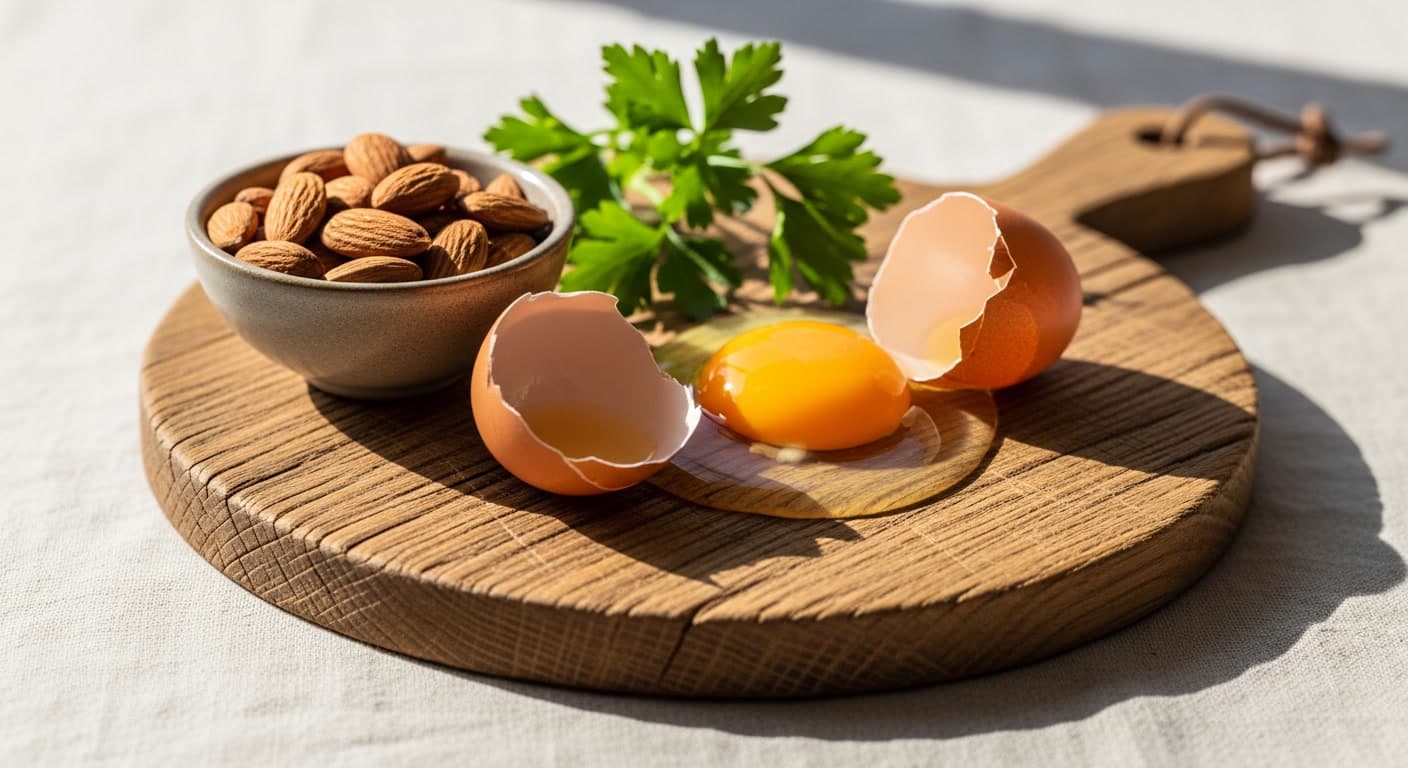
- Eggs: 6 g of protein per egg with a complete amino acid profile. Also provide biotin and zinc. One of the highest bioavailability scores of any protein source.
- Chicken breast: 31 g of protein per 100 g. Lean, affordable, and rich in the sulfur-containing amino acids (methionine, cysteine) that are direct precursors to keratin.
- Lentils: 9 g of protein per 100 g (cooked). Also supply iron and folate. Pair with a grain to complete the amino acid profile.
- Greek yogurt: 10 g of protein per 100 g. Contains casein and whey, both complete proteins. Also supports gut health, which influences nutrient absorption.
- Salmon: 20 g of protein per 100 g, plus omega-3 fatty acids that reduce scalp inflammation. A dual-purpose hair growth food.
The crash diet connection
Crash diets deserve their own section because they are the most common trigger for protein deficiency hair loss in otherwise healthy people. When you drop to 800 calories per day, protein intake almost always falls below the 0.8 g/kg threshold. The body enters a conservation mode where hair growth is treated as a luxury.
The shedding typically begins 2 to 3 months after the caloric restriction starts. That delay is the telogen lag: follicles pushed out of anagen during the deficit period complete their resting phase and release the hair shaft weeks later. By the time you notice the shedding, you may have already stopped the diet, which makes it harder to connect cause and effect. See the full breakdown of rapid weight loss shedding vs pattern baldness to understand how to tell them apart.
How to track recovery after increasing protein
If you suspect protein deficiency is behind your hair thinning, increasing intake is the intervention. But how do you know it is working? The mirror is useless for detecting gradual changes over months. You need objective measurement.
BaldingAI captures density shifts across zones (hairline, temples, crown, part line) at each scan. Here is the protocol: take a baseline scan before changing your diet. Make the diet change you agreed with your clinician or dietitian, and log it with the date. Scan weekly under the same lighting and angle. At week 6, compare your trend. At week 12, you have enough data to determine whether density is improving, stable, or still declining.
If density improves, protein was likely a significant factor. If it remains flat or continues declining despite adequate protein, there is another cause at play. That data gives your dermatologist something concrete to work with instead of speculation.
When protein is not the full picture
Protein deficiency rarely exists in isolation. People who are under-eating protein are often simultaneously low in iron, zinc, and vitamin D. The Guo and Katta review recommends screening people with hair loss for nutrient deficiency risk factors through their medical and dietary history, with lab tests only when those risk factors are present.
This is why increasing protein alone may not fully resolve shedding. If your iron is also low, your follicles are fighting two battles at once. A complete blood panel that includes ferritin, vitamin D, and thyroid markers gives you the full picture. Correct everything that needs correcting, then track the combined effect.
Related reading
- Best foods for hair growth
- Iron deficiency and hair loss
- Telogen effluvium vs male pattern baldness
- Rapid weight loss shedding vs male pattern baldness
Sources: Guo & Katta 2017, Dermatology Practical & Conceptual, Rushton 2002, Clinical and Experimental Dermatology.