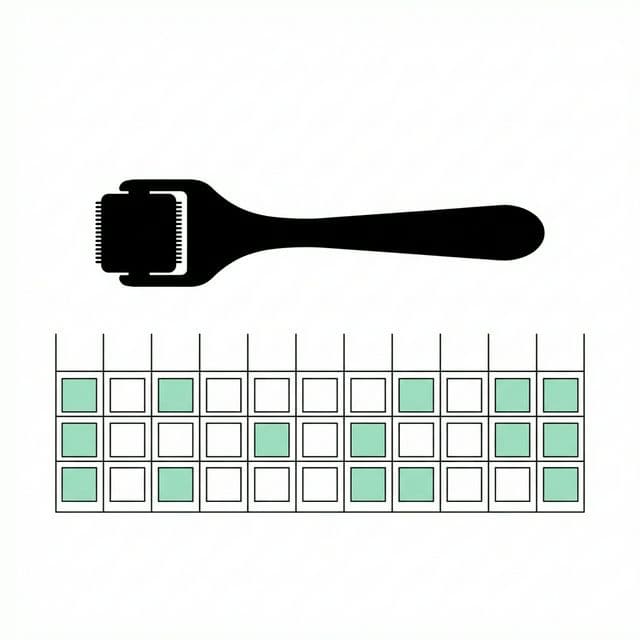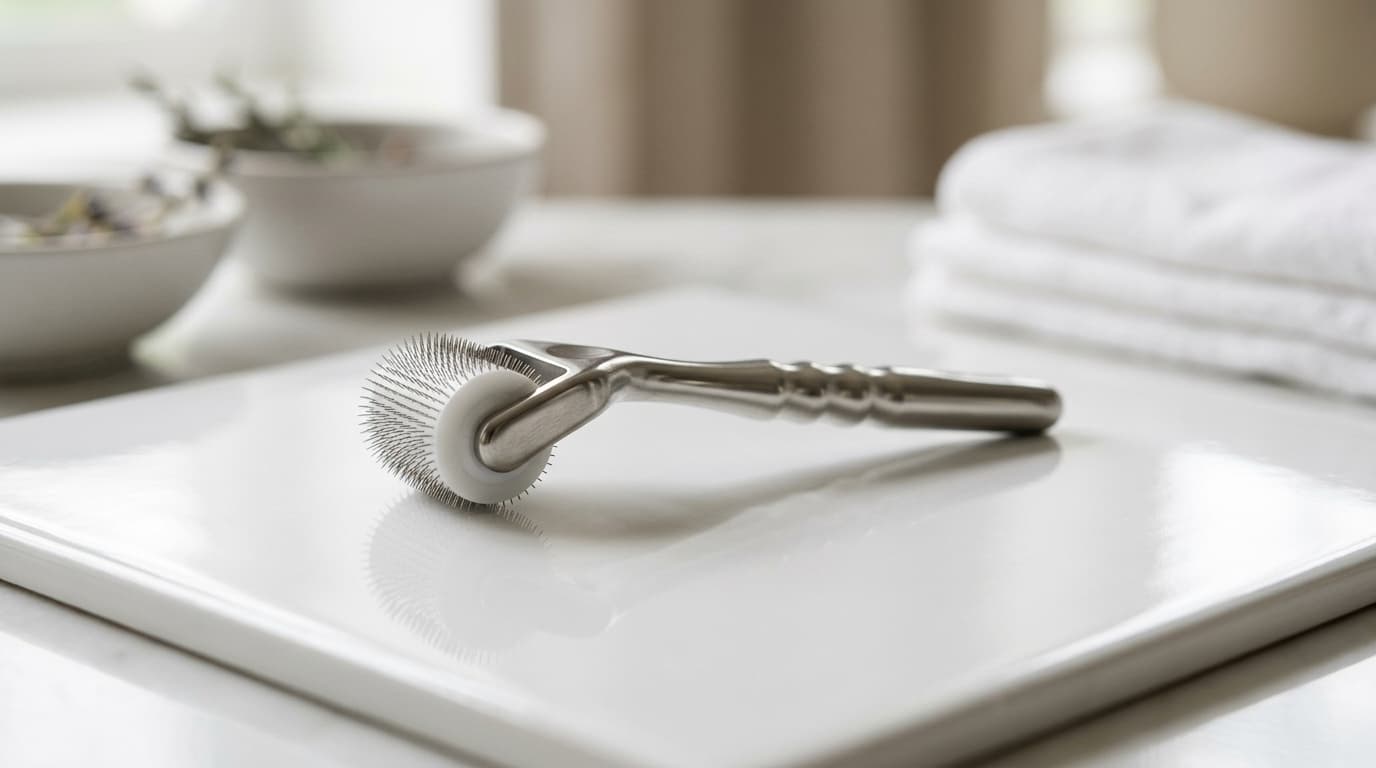
Microneedling for hair loss has gained serious traction in recent years, with studies showing it can boost the effectiveness of topical treatments like minoxidil. But the question that divides forums and frustrates beginners is frequency: should you microneedle weekly or biweekly? The honest answer is that the optimal cadence depends on your skin recovery, needle depth, and how well you track the results. Switching randomly between frequencies without structured tracking is a guaranteed way to waste months and learn nothing.
TL;DR
- Pick one cadence window first and log outcomes consistently.
- Only change cadence after a full decision window.
- Track irritation and adherence alongside photo trends.
- Use one-variable logic when changing frequency.
Important
This article is educational and not medical advice. If you are worried about sudden shedding, scalp symptoms, or side effects, talk to a licensed clinician.
The science behind microneedling frequency
Microneedling works by creating controlled micro-injuries in the scalp, which triggers a wound-healing cascade that stimulates growth factors and increases blood flow to hair follicles. When combined with topical minoxidil, the micro-channels also improve absorption. The key biological constraint is healing time. Your scalp needs to complete its wound-healing cycle before the next session, or you risk chronic inflammation that can actually impair hair growth.
Most studies that show positive results use either weekly or biweekly protocols with needle depths between 0.5mm and 1.5mm. Deeper needling generally requires more recovery time than shallow needling, which is why studies tend to space deeper sessions further apart. Your individual healing speed, scalp sensitivity, and whether you have any scalp conditions like seborrheic dermatitis all influence which cadence a dermatologist may suggest for you.
How to test weekly vs biweekly properly
The one-variable rule applies here. Do not change your microneedling frequency while simultaneously switching products, adjusting minoxidil application timing, or starting a new supplement. Pick one cadence and run it for a full 12-week evaluation window before even considering a switch.
Agree a starting cadence and needle depth with a dermatologist, and write both down before your first session so the log starts clean. Run your 12-week window with consistent photo captures and the tracking protocol below. At the end, evaluate whether density is trending up, stable, or declining, and whether your scalp is tolerating the sessions well.
What to track each session
Your microneedling tracking log needs more than just photos. Record these data points for every session:
- Session date and time: Consistency in scheduling helps you identify if irregular timing correlates with different outcomes.
- Needle depth: Log the exact depth setting every time. If you change devices, note the switch.
- Redness duration: How many hours or days does scalp redness persist after the session? This is your primary recovery indicator.
- Pain or sensitivity level: Rate 1-5. Increasing sensitivity over time is worth raising with your dermatologist.
- Bleeding: Note whether you saw any pinpoint bleeding, which indicates you are reaching the dermal layer. Some bleeding at 1.0mm+ is normal, but excessive bleeding suggests too much pressure.
- Topical application timing: If you use minoxidil post-needling, log the wait time. Ask your dermatologist how long to wait after deeper sessions.
Interpreting your recovery signals
Your scalp recovery pattern is the most important signal for frequency decisions. If redness resolves within 24-48 hours and you have no lingering tenderness by day three, your current frequency is within your healing capacity. If redness persists past 72 hours, or if you notice cumulative irritation building over weeks, log it and raise it with your dermatologist before the next session.
Watch for these warning signs that indicate you are over-needling: persistent scalp dryness or flaking between sessions, increased sensitivity that builds rather than resets, scabbing or crusting that was not present in earlier sessions, and hair breakage near the needle zones. If any of these appear, pause, photograph the area, and talk to a dermatologist before your next session.
When to switch frequency
Only change cadence after completing a full 12-week evaluation window. At your review, assess three factors:
- Density trend: Are your photos and scores showing improvement, stability, or decline?
- Scalp tolerance: Is your recovery consistent, or has irritation been building?
- Adherence: Did you actually complete the sessions on schedule, or did you skip multiple sessions due to irritation or logistics?
Bring those three answers to your dermatologist. An improving trend with good tolerance, a flat trend with excellent tolerance, and an improving trend with borderline tolerance each lead to a different conversation about cadence, and wanting faster results is not a reason to push frequency. Sustainable results require a sustainable protocol.
Common mistakes with microneedling cadence
- Frequency hopping: Alternating between weekly and biweekly based on how your scalp feels that day eliminates any chance of drawing conclusions.
- Ignoring recovery signals: More is not better. Chronic micro-inflammation from over-needling can accelerate hair loss rather than prevent it.
- Changing depth and frequency simultaneously: Treat depth and frequency as separate variables. Test one at a time.
- Not tracking irritation: If you only track photo outcomes and ignore recovery data, you will miss early warning signs of protocol failure.
Related reading
Sources: PubMed: minoxidil plus microneedling evidence and AAD: treatment overview.