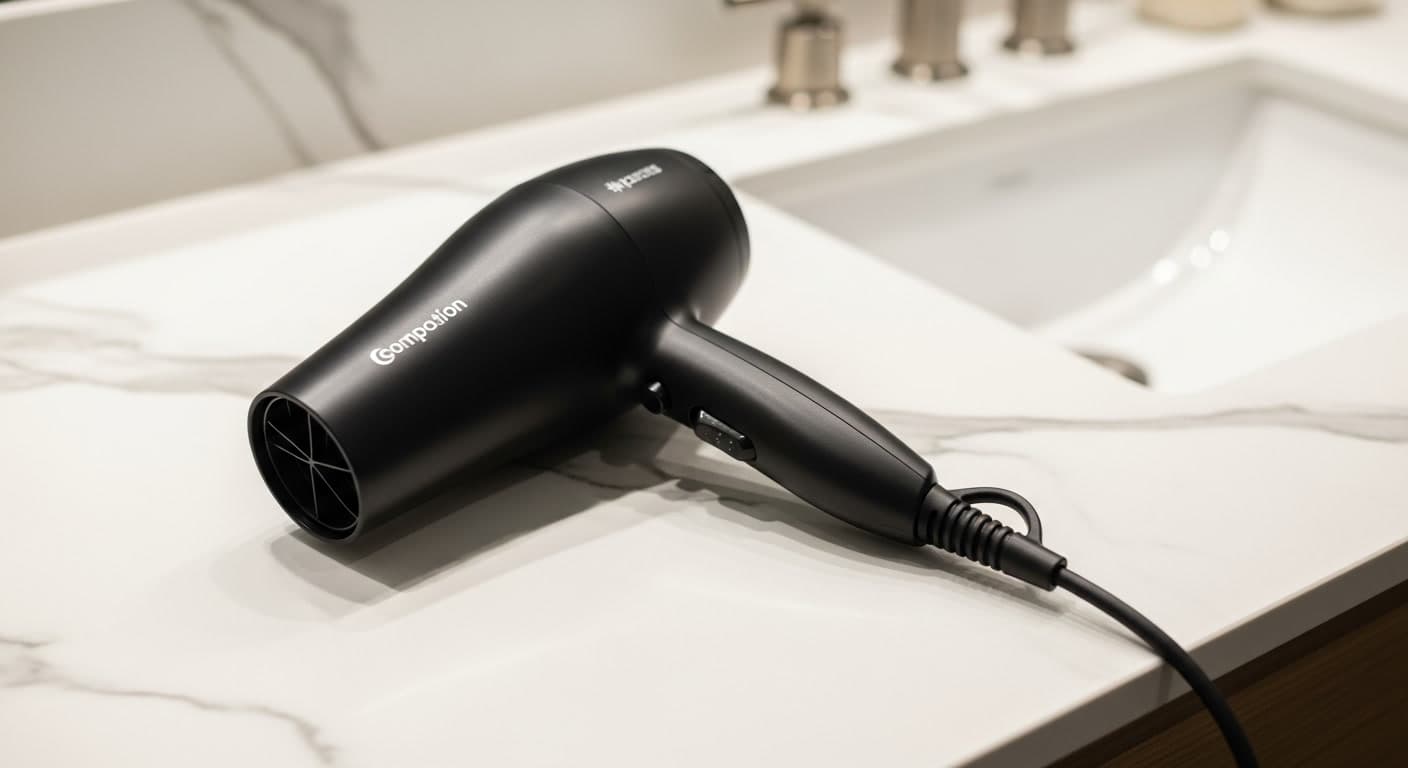
Heat styling does not cause androgenetic alopecia. That is the clearest thing dermatology can say on the subject. Blow dryers, flat irons, and curling tongs damage the hair shaft. They cause breakage, brittleness and visible thinning, but they do not destroy the follicle, which is what actually determines whether your hair grows back. For someone already experiencing pattern hair loss, however, heat damage makes things look significantly worse and can mask or amplify real density changes you are trying to track.
This guide explains exactly what heat does, what it does not do, and how to manage styling so it does not interfere with your ability to track real hair loss progress with BaldingAI.
TL;DR
- Heat styling damages the hair shaft (cuticle and cortex) but does not kill hair follicles or cause androgenetic alopecia.
- Damage creates breakage, split ends, and reduced diameter that makes thinning hair look worse than it is.
- Repeated extreme heat (above 230°C) can theoretically damage the follicle opening, but this level of damage is rare in normal styling conditions.
- For accurate hair loss tracking photos, air-dry before capturing scans. Heat styling temporarily alters texture and apparent density.
- Heat protectants, lower temperatures, and reduced frequency prevent shaft damage without eliminating styling entirely.
Important
This article is educational and not medical advice. If you are worried about sudden shedding, scalp symptoms, or side effects, talk to a licensed clinician.
What heat actually does to hair
Hair shafts are composed of keratin protein arranged in a cortex surrounded by a cuticle of overlapping scales that protect the inner structure. Heat above 150°C begins disrupting the hydrogen bonds in the keratin, altering the temporary shape of the hair (which is how straightening and curling work). Heat above 200°C starts breaking disulfide bonds, causing permanent structural damage to the cortex. Heat above 230°C denatures the protein itself, resulting in irreversible brittleness.
A 2011 study in the Journal of Cosmetic Science by Ruetsch et al. documented progressive cortex damage in hair samples exposed to temperatures above 200°C for extended periods. The result is increased porosity, raised cuticle scales and reduced tensile strength, so the hair snaps under less mechanical stress. For someone with finer, miniaturizing hair, this breakage increases overall shedding counts and creates the visual impression of accelerating loss.
Heat styling vs follicle damage: a critical distinction
The follicle sits 3-4 mm below the scalp surface. Normal heat styling heats the scalp surface to 40-60°C in typical conditions, far below the temperature required to damage tissue at follicle depth. A scalp burn severe enough to damage follicles would require sustained direct contact with a heat source above 60°C, which is not what happens with consumer styling tools used normally.
This means a blow dryer used daily does not stop your hair from growing back. It damages the hair that is already grown. The loss you see is from breakage, not follicle failure. Once you reduce heat damage, the hair that grows from those intact follicles will be healthier. Confusing breakage-related shedding with follicle-level loss is one of the most common tracking errors people make.
How heat styling confuses hair loss tracking
For people using BaldingAI or any photo-based tracking system, heat styling introduces variables that affect apparent density in photos without reflecting real follicle status. Freshly blow-dried hair has a different texture, volume, and light-interaction profile than air-dried hair. Straightened hair lies flat, making the scalp more visible and appearing thinner. Diffused curly hair can appear denser in photos than the same hair air-dried straight.
For consistent, comparable scans, photograph your hair in its air-dried natural state, at the same time after washing, before applying any styling products. This standardizes the texture variable so that density changes you see in your scores reflect real follicle output, not styling differences. See the photo angle checklist for a complete protocol.
Practical guidelines for minimizing heat damage
Keep your styling tool temperature below 180°C for fine or already-damaged hair. Medium-thick healthy hair can tolerate up to 200°C with a heat protectant. Thick coarse hair may require up to 220°C briefly, but repeated passes should be avoided. Heat protectants work by coating the hair shaft and slightly raising the thermal threshold before cuticle damage begins. They do not eliminate heat damage, but they reduce it meaningfully at the same temperature setting.
Air-dry to 80% dry before applying heat, rather than applying high heat to fully wet hair. Water-logged hair is more susceptible to bubble formation inside the cortex (hygral fatigue), which causes the shaft to swell and weaken. For someone already managing hair thinning, these habits compound over time and affect how hair looks and behaves in the months ahead.
When to be concerned about heat-adjacent shedding
If you reduce or eliminate heat styling and shedding does not decrease within 8-12 weeks, the loss is not primarily from heat damage. That is a signal to investigate other causes: androgenetic alopecia, telogen effluvium, nutritional deficiency, or scalp inflammation. At that point, blood work and a dermatology evaluation are the next logical steps.
BaldingAI density scores will track this accurately: if scores improve after eliminating heat, heat was the primary driver. If scores continue declining despite the change, a different mechanism needs evaluation. See early signs of hair loss for the distinction between styling-related breakage and pattern loss signals.
Common questions
Can blow drying cause permanent hair loss?
Under normal use, no. Blow drying damages the hair shaft but does not reach or damage the follicle. The hair that breaks from heat damage grows back from the intact follicle. Extreme heat sustained directly on the scalp (such as a scalp burn) can theoretically cause permanent follicle damage, but this is not what happens with standard heat styling.
Does straightening make hair loss worse?
Flat iron straightening does not cause androgenetic alopecia to progress faster, but it does make thinning hair look worse by reducing volume and increasing scalp visibility. For people with already-fine or miniaturizing hair, straightening amplifies the visual appearance of thinning without changing the underlying follicle count or function.
How long should I air-dry before taking tracking photos?
Allow at least 30-45 minutes of air-drying after washing before taking your BaldingAI scans. The goal is for the hair to be in a consistent dry state with no styling products applied. Taking photos at the same point in the wash cycle every week eliminates the texture variable from your tracking data.
Next step
If you suspect heat damage is distorting your hair loss tracking, switch to air-dry photos for the next 8 weeks and compare your scores to the previous 8 weeks. If scores stabilize or improve, heat was a confounding variable. If they continue declining at the same rate, the underlying cause needs investigation independent of your styling habits.
Sources: Ruetsch et al. (2011) Journal of Cosmetic Science: Hair cortex damage from heat | Saed & Khachemoune (2011): Trichology and heat styling review | AAD: Hair loss prevention and heat styling tips.